
IDEO defines human centered design as a creative approach to problem-solving that starts with people and ends with innovative solutions that are tailor-made to suit their needs.
It’s vital to identify the real goal of real people who will use your product.
But what distinguishes human-centered design from other problem solving approaches?
The main focus on understanding the perspective of the person who experiences a problem, their needs, and whether the solution that has been designed for them is truly meeting their needs effectively or not.
Human Centered Design Phases
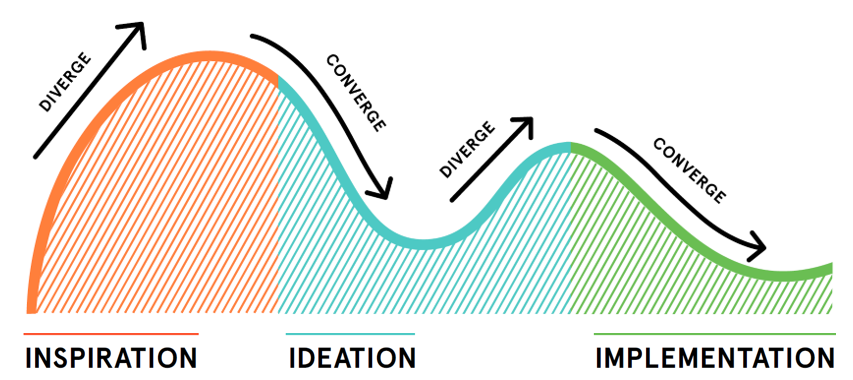
Inspiration
In this phase, you’ll learn how to better understand people. You’ll observe their lives, hear their hopes and desires, and get smart on your challenge.
Ideation
Here you’ll make sense of everything that you’ve heard, generate tons of ideas, identify opportunities for design, and test and refine your solutions.
Implementation
Now is your chance to bring your solution to life. You’ll figure how to get your idea to market and how to maximize its impact in the world.
So, now we can ask, what is the difference between human centered design and user experience design?
Human Centered Design is a framework that considers human perspectives throughout the design process.
User experience design is the design of multisensory experiences, typically at the interface between humans and technology. It is one of many design disciplines that takes a human-centered approach.
 Atomic Fox